Energy Decarbonization
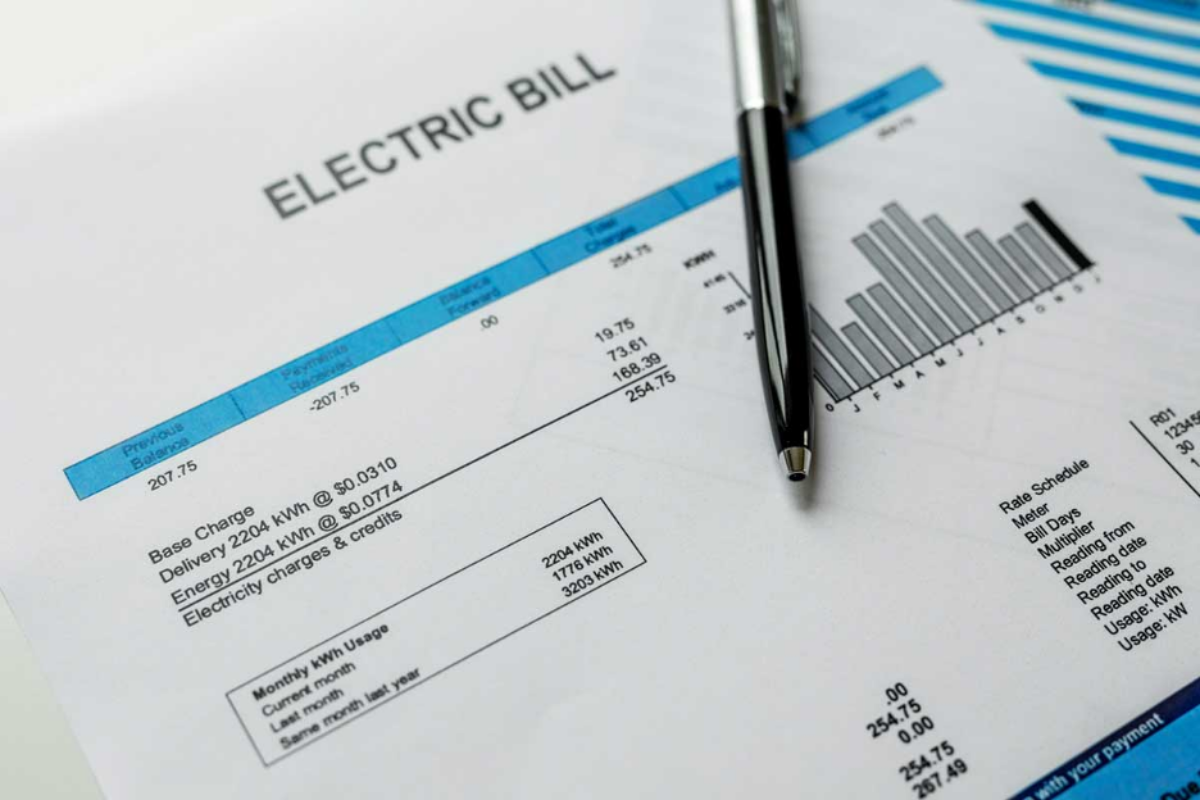
Understanding your electricity bill requires moving beyond the total dollar amount and looking at the kilowatt-hour (kWh) consumption patterns. Most households operate on a "passive consumption" model, where energy is wasted through standby power, poor insulation, and inefficient heating cycles. To cut a bill in half, you must transition to an "active management" model. This involves auditing the three pillars of home energy: thermal regulation, appliance efficiency, and peak-load timing.
For example, a standard central AC unit might consume 3,500 watts per hour. In a poorly insulated home, that unit runs 20% longer than necessary just to fight "infiltration"—outside air leaking in. By sealing those leaks, you aren't just saving pennies; you are reducing the mechanical wear on your most expensive system while slashing the 500-700 kWh of waste generated monthly. According to data from the U.S. Energy Information Administration (EIA), space cooling and heating account for nearly 47% of total energy use in the average American home. Targeting this sector yields the highest ROI.
Cost of Energy Blindness
The primary reason utility bills remain high is "phantom loading" and thermal bypass. Most people assume that turning off a light is the ultimate saving grace, but lighting usually accounts for only 9-11% of a bill. The real drain comes from devices that remain in "ready" mode. A gaming console or an old desktop computer left plugged in can draw 15-25 watts continuously. While small individually, a dozen such devices create a "baseload" that keeps your meter spinning 24/7.
Ignoring the "Time of Use" (TOU) pricing is another critical error. Many utility providers, such as PG&E in California or Con Edison in New York, charge significantly higher rates during peak hours (usually 4 PM to 9 PM). Running a dishwasher or dryer during these windows can cost three times as much as running them at 10 PM. Failing to adapt to these pricing tiers results in "bill shock," where the volume of energy used stays the same, but the cost skyrockets due to poor timing.
Strategic Savings
Auditing with Real-Time Energy Monitors
To fix what you can't see, you need data. Standard utility meters are "lagging indicators"—they tell you what you spent last month, not what you are spending right now. Investing in a device like the Sense Energy Monitor or the Emporia Vue allows you to see the exact wattage of every appliance in real-time via an app.
When you see that your 15-year-old refrigerator is pulling 600 watts every time the compressor kicks in (compared to 100-150 watts for a modern Energy Star model), the decision to upgrade becomes a mathematical certainty rather than a guess. These monitors identify "signature" electrical patterns, helping you spot a failing water heater element or a dehumidifier that’s running far longer than it should.
HVAC Optimization and Variable Speed Upgrades
Your HVAC system is the "heavy lifter" of your home. Traditional single-stage compressors are binary; they are either 100% on or 100% off. This leads to frequent cycling and high "inrush current." Upgrading to a variable-speed heat pump, such as those from Mitsubishi Electric or Daikin, allows the system to modulate its output.
By running at 20% capacity for longer durations, these systems maintain a steady temperature using a fraction of the energy. Furthermore, integrating a smart thermostat like the Ecobee Premium or Nest Learning Thermostat ensures the system isn't cooling an empty house. These devices use geofencing to lower energy use the moment you leave the driveway, often saving 10-15% on heating and cooling costs alone.
Eliminating the Standby Power "Vampire" Load
The average home has 20 to 40 "vampire" devices. To combat this, utilize Tier 2 Advanced Power Strips (APS). Unlike standard surge protectors, these strips have a "master" outlet. When you turn off your TV, the strip automatically cuts power to the peripheral devices like soundbars, streaming sticks, and consoles.
For home offices, using a smart plug with a timer can ensure that monitors and printers are physically disconnected from the grid between 11 PM and 7 AM. This simple automation can shave $10-$20 off your monthly bill without any manual effort. It’s about creating a "zero-waste" electrical environment where power is only present when utility is required.
Thermostatic Water Heating Calibration
Water heating is typically the second-largest energy expense. Most manufacturers ship water heaters set to 140°F (60°C). This is unnecessarily high for most households and poses a scalding risk. Lowering the setpoint to 120°F (49°C) reduces standby heat loss—the energy used to keep the water hot while no one is using it.
For those with electric tank heaters, adding an insulating "blanket" can reduce heat loss by 25-45%. If you are ready for a hardware change, switching to a Hybrid Heat Pump Water Heater (like the Rheem ProTerra) can be a game-changer. These units pull heat from the surrounding air to warm the water, operating at 300-400% efficiency compared to the 90% efficiency of standard electric resistance tanks.
The Impact of LED Conversion and Lumen Management
While lighting is a smaller piece of the pie, it is the easiest to optimize. Replacing a 60W incandescent bulb with a 9W LED (like Philips Hue or Cree Lighting) yields an 85% energy reduction per socket. However, the real expert move is "lumen management" through motion sensors in transition zones like hallways, garages, and pantries.
Lutron Maestro occupancy sensors ensure that lights are never left on by mistake. In a household with children, this can reduce lighting run-time by 30-50%. Additionally, choosing bulbs with a high Color Rendering Index (CRI) ensures you don't feel the need to turn on more lights to "see better," as the light quality is superior at lower wattages.
High-Efficiency Envelope Sealing
Energy isn't just used; it’s lost. Air leakage can account for up to 30% of heating and cooling energy use. Use a thermal imaging camera (or a simple incense stick) to find drafts around window frames, electrical outlets, and baseboards. Applying Great Stuff spray foam or high-quality silicone caulk is a $50 DIY project that can save hundreds annually.
Specifically, focus on the attic hatch and the "rim joist" in the basement. These are the two areas where the "stack effect" pulls conditioned air out of your home. By sealing these bypasses, you ensure that the air you paid to heat or cool stays inside the living space.
Transformation Cases
Case Study 1: The Suburban Retrofit
A family of four in a 2,500 sq. ft. home in Austin, Texas, was facing summer bills of $450. Their primary issues were an aged AC unit and poor attic insulation.
-
Action: They installed R-49 blown-in cellulose insulation and switched to a smart thermostat. They also shifted laundry and dishwashing to after 9 PM to avoid peak rates.
-
Investment: $1,800 (after local utility rebates).
-
Result: Monthly bill dropped to $210 in the peak of summer, a 53% reduction. The project paid for itself in less than two years.
Case Study 2: The Remote Worker’s Apartment
A professional working from a 1-bedroom apartment in Seattle noticed a spike in electricity due to high-end computing gear and constant lighting.
-
Action: Installed smart plugs for the workstation, replaced all halogen bulbs with LEDs, and used a "heavy curtain" strategy to block solar heat gain during the day.
-
Investment: $150.
-
Result: Monthly bill dropped from $115 to $55. By simply managing the "baseload" of the home office and thermal gain, they achieved a 52% saving.
Saving Comparison
| Intervention | Difficulty | Estimated Cost | Potential Savings | ROI Period |
| Smart Thermostat | Easy | $120 - $250 | 10-15% | 12 Months |
| LED Retrofit | Easy | $50 - $100 | 5-10% | 6 Months |
| Attic Insulation | Moderate | $800 - $2,000 | 15-30% | 24-36 Months |
| Heat Pump Water Heater | Professional | $1,500 - $3,000 | 15-20% | 4-5 Years |
| Air Sealing (DIY) | Easy | $30 - $100 | 10-20% | 3 Months |
| Advanced Power Strips | Easy | $40 - $80 | 3-5% | 8 Months |
Common Pitfalls
The biggest mistake homeowners make is "partial optimization." For example, buying a high-efficiency AC but failing to fix leaky ducts. If your ductwork has holes, you are effectively air-conditioning your attic or crawlspace. Always check the integrity of your delivery system before upgrading the "engine."
Another trap is the "rebound effect." This happens when someone installs efficient lights and then feels they can leave them on longer because they "don't use much power." Efficiency only works if it is coupled with mindful usage. Lastly, avoid "energy-saving" gadgets sold on social media that claim to "clean" your electricity or stabilize voltage by plugging into a single outlet; these are scientifically debunked scams. True savings come from mechanical efficiency and behavioral changes, not magic boxes.
FAQ
Does unplugging my phone charger actually save money?
Modern "smart" chargers draw less than 0.5 watts when not in use. While unplugging them is good practice, it won't move the needle on your bill. Focus instead on larger "vampire" loads like desktop PCs, printers, and old TVs.
Is it cheaper to leave the AC on all day or turn it off when I leave?
It is almost always cheaper to turn it off or raise the setpoint by 7-10 degrees. Modern systems can recover the temperature relatively quickly, and the heat gain prevented by keeping a house "cool" while empty is rarely worth the energy expenditure.
How much does a ceiling fan actually save?
A ceiling fan doesn't lower the temperature of a room; it lowers the temperature of the person through evaporative cooling. This allows you to raise your AC thermostat by about 4°F without losing comfort, which can reduce cooling costs by 10%.
Will a space heater save money over central heating?
Only if you are heating a single room and turning the central heat down significantly (below 62°F). If you run a space heater in a room while the rest of the house is also being heated, your bill will likely increase because electric resistance heating is very expensive.
Are solar panels the only way to reach 50% savings?
No. Most people can reach 30-40% through efficiency alone. Solar is a way to offset the remaining 50-60%, but it is more cost-effective to reduce your "demand" first so you can buy a smaller, cheaper solar array.
Author’s Insight
In my years analyzing home performance, I've found that the "set and forget" mentality is the most expensive habit. I personally managed to drop my own grid reliance by 55% simply by using a real-time monitor to identify that my "efficient" dishwasher had a heated dry cycle that pulled 1,200 watts for 45 minutes. By switching to air-dry, I saved nearly 30 kWh a month. My best advice: stop looking at the total bill and start looking at the "always-on" wattage of your home. If your home is drawing more than 200 watts while you are sleeping, you have a major opportunity for savings.
Summary
Cutting your electricity bill in half is not a matter of luck; it is a matter of engineering. By tackling the heavy hitters—HVAC, water heating, and phantom loads—and utilizing data-driven tools like energy monitors, you can see immediate results. Start with the low-hanging fruit of air sealing and LED conversion, then move toward smart automation and appliance upgrades. The cumulative effect of these small, precise changes will yield a leaner, more efficient home that costs significantly less to operate every single month.