Popular Articles
 Banking
02.04.2026
Best Banks for Saving Money
The best bank for saving is the one whose APY, fees and insurance hold up on paper, not a ranking. Rates change often, so this article does not rank banks or name winners. It explains how to pick one instead: how to compare an advertised APY with the FDIC national average of 0.38% and the 4.63% rate cap, where fees and minimums are disclosed under Regulation DD and the credit union rule in NCUA Part 707, how to confirm FDIC or NCUA insurance, what to expect from online banks, credit unions and branches, and how promotional rates can shrink. A worked comparison of two hypothetical $10,000 accounts shows how a higher teaser rate with a fee nets about $209 less in year one, and a short checklist closes the piece.
 Banking
29.03.2026
How to Switch Banks Without Problems
Open the new account first and keep the old one alive until every payment has moved. The usual way to switch banks without problems is to open the new account first, rebuild your money flows from two or three months of statements, and keep the old account open with a small buffer until a full billing cycle or two passes without a single transaction. This article gives a week-by-week timeline table, explains the federal rule that lets you stop a preauthorized debit, covers what happens to checks and autopays that arrive after you close, and says what closing an account does and does not do to your credit. It also reports where the CFPB's data-sharing rule stands as of November 2026, since it is often described as making switching easier.
 Banking
26.03.2026
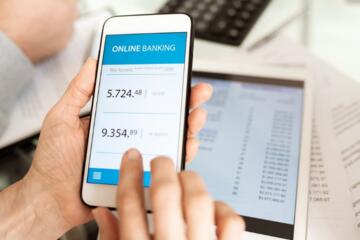
Online Banks vs. Traditional Banks
Online and branch banks share the same FDIC coverage, but not rates, cash access or app risk. The FDIC's October 2026 national savings rate is 0.38%, so an illustrative 4.00% account would earn $362 more on $10,000 in a year, while the wrong kind of app can put the insurance itself in question. This comparison sets the two models side by side on rates, fees, ATMs, cash deposits, branch services, customer support and deposit insurance. It shows how to check that a bank is really insured with the FDIC's BankFind tool, the official sign and the NCUA locator, explains why fintech apps that only partner with banks are a different case, works through an illustrative $10,000 rate-gap calculation, and ends with who each model tends to suit.