Liquid Capital Trends
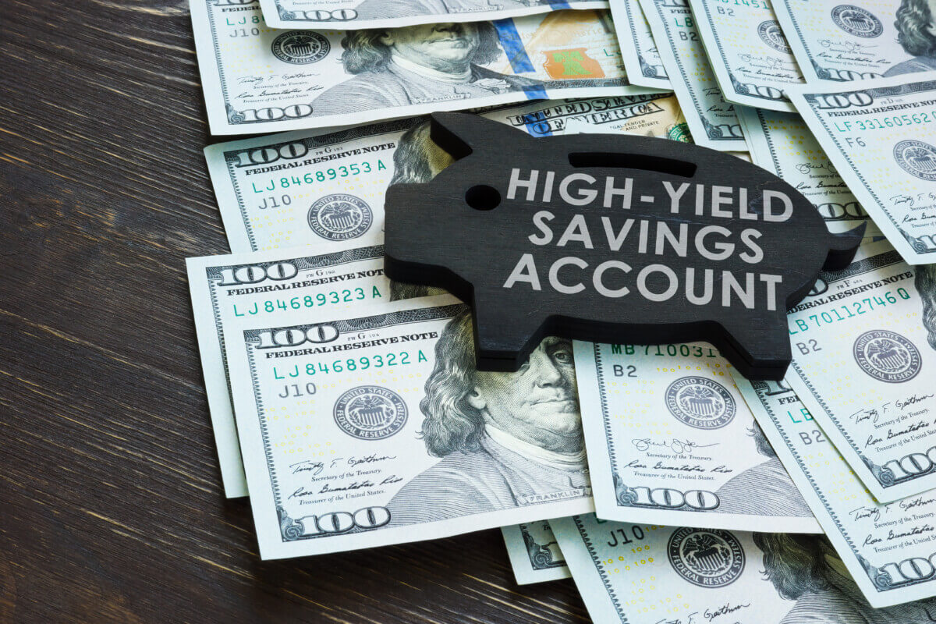
The traditional banking model is built on inertia. Large institutions rely on the fact that most customers won't move their money, even when the national average savings rate hovers around a meager 0.45%. In contrast, digital-first banks operate with lower overhead, passing those savings to you through significantly higher Annual Percentage Yields (APY).
Think of an HYSA not as an investment vehicle like a stock portfolio, but as a "holding pen" that protects your purchasing power. For instance, if you hold $50,000 in a standard big-bank account, you might earn $5 a year. In a high-yield environment at 4.50%, that same balance generates $2,250 annually.
Real-world data from the FDIC shows a staggering disparity between top-tier digital banks and the "Big Four." While the federal funds rate has fluctuated, high-yield leaders like Marcus by Goldman Sachs or Ally Bank consistently maintain rates that are 10x to 15x higher than the national average.
Cash Management Errors
The most damaging mistake savers make is the "convenience tax"—staying with a bank simply because their checking account is already there. This lack of movement results in "silent inflation," where the rising cost of goods outpaces your interest earnings, effectively shrinking your wealth every month.
Another major pain point is the failure to distinguish between "teaser rates" and sustainable yields. Some platforms lure users with high introductory offers that plummet after three months. Without a proactive strategy, you end up "rate chasing," which creates administrative friction and potential tax reporting headaches across multiple institutions.
We also see many high-net-worth individuals ignoring the FDIC insurance limits. Keeping $500,000 in a single HYSA exposes $250,000 to bank failure risk. These errors aren't just theoretical; during the banking jitters of early 2023, those who hadn't diversified their cash holdings faced significant anxiety regarding liquidity and asset protection.
Yield Optimization
Prioritize Digital-Only Institutions for Maximum APY
To capture the best rates, look toward banks without physical branches. Institutions like SoFi, UFB Direct, and BrioDirect frequently top the charts because their operational costs are a fraction of traditional competitors.
Verify FDIC or NCUA Insurance Coverage
Never deposit money into a "fintech" without verifying the underlying bank that holds the funds. For example, Wealthfront and Betterment are not banks themselves, but they partner with FDIC-insured institutions to provide coverage, often up to $2 million or more through "sweep" programs.
Automate the "Sweep" Methodology
Set up a recurring transfer that moves any balance in your checking account exceeding your monthly expenses into your HYSA. This ensures that every dollar earns interest from the first day possible, rather than sitting idle in a zero-interest checking account.
Utilize the "Bucket" System for Goal Tracking
Platforms like Ally allow you to divide your single HYSA into different "buckets" (e.g., House Down Payment, Wedding, Car Repair). This psychological trick prevents you from spending your emergency fund on a vacation while still benefiting from a high aggregate interest rate.
Monitor the Federal Reserve's Dot Plot
Interest rates on HYSAs are variable. By following the Federal Reserve's guidance on interest rate hikes or cuts, you can anticipate when to lock in rates via Certificates of Deposit (CDs) if you suspect HYSA yields are about to drop.
Leverage Sign-Up Bonuses
Banks like Discover and Capital One occasionally offer cash bonuses ranging from $200 to $1,500 for new deposits. When combined with the APY, your "effective yield" for the first year can easily surpass 6% or 7%.
Case Studies
Case Study 1: The Freelancer’s Tax Reserve
Sarah, a freelance graphic designer, kept $40,000 in a standard savings account for her quarterly tax payments and emergency fund. She was earning roughly $4 per year. After moving the balance to a CIT Bank Platinum Savings account at 4.70% APY, she began earning $156 per month. Within a year, she had an extra $1,880—enough to cover her professional software subscriptions and a new laptop, simply by changing where the money sat.
Case Study 2: The Tech Couple’s Down Payment
A couple in Austin was saving $150,000 for a home down payment over a two-year period. By utilizing a high-yield cash account through Wealthfront, which offered a boosted rate for referrals, they averaged a 5.00% return. Over two years, including their monthly contributions, they generated over $16,000 in interest alone. This "passive" growth allowed them to increase their budget for renovations without increasing their monthly savings rate.
Optimization Checklist
-
Current Rate Check: Is your current APY at least 4.00%? If not, move immediately.
-
Fee Audit: Ensure there are $0 monthly maintenance fees and no minimum balance requirements.
-
Liquidity Access: Does the bank offer an easy-to-use mobile app and fast ACH transfers (1–2 days)?
-
Compounding Frequency: Confirm that interest compounds daily and is credited monthly for maximum growth.
-
Insurance Verification: Confirm the bank is a member of the FDIC (banks) or NCUA (credit unions).
-
Customer Support: Check recent reviews for "transfer freezes" or "locked accounts," which can be a red flag for certain fintechs.
Avoiding Common Pitfalls
The most common trap is the "Minimum Balance for Top Tier" requirement. Some banks, like CIT Bank, require a minimum balance (e.g., $5,000) to unlock the highest tier of interest. If your balance drops, your rate might default to 0.25%. Always read the fine print to ensure your balance aligns with the bank's requirements.
Another issue is the "Withdrawal Limit." While Federal Regulation D (which limited savings withdrawals to six per month) was suspended, many banks still enforce their own limits. If you need frequent access to your cash, an HYSA might not be the right tool for daily expenses—use it strictly for "stagnant" cash.
Finally, don't forget the tax man. Interest earned in an HYSA is considered taxable income. If you earn $2,000 in interest and are in the 24% tax bracket, you will owe $480 in taxes. Always set aside a portion of your interest earnings for the IRS to avoid surprises in April.
FAQ
Are high-yield savings accounts safe?
Yes, provided the institution is FDIC or NCUA insured. This protects your deposits up to $250,000 per depositor, per account category, in the event of a bank failure.
Why does my local bank offer such low rates?
Traditional banks have high overhead costs (buildings, staff, ATMs) and a "sticky" customer base that rarely switches, giving them little incentive to offer competitive rates.
How often do the interest rates change?
HYSAs have variable rates. They can change at any time based on the Federal Reserve’s decisions and market competition. You will usually receive an email notification when your rate moves.
Is there a limit to how much I can deposit?
Most banks allow millions, but only the first $250,000 is insured. For balances above this, it is safer to spread funds across multiple institutions or use a "sweep" service like Betterment.
Can I use an HYSA as my main checking account?
Generally, no. Most HYSAs do not come with debit cards or check-writing privileges. It is best to pair an HYSA with a high-quality checking account from a bank that allows instant transfers.
Author’s Insight
In my years of analyzing cash flow strategies, I’ve found that the psychological "friction" of opening a new account is the only thing keeping people from free money. I personally keep my "peace of mind" fund in a digital high-yield account separate from my primary bank to avoid the temptation of spending it. My advice is simple: don't wait for the "perfect" rate. If you are earning less than 4%, you are losing money to inflation every hour. Open an account with a reputable provider like Marcus or Ally today—it takes ten minutes and pays for itself within the first month.
Summary
High-yield savings accounts are not just "worth it"—they are an essential component of a rational financial plan in a high-inflation economy. By shifting your idle cash from traditional institutions to digital-first high-yield platforms, you turn a dormant asset into a consistent revenue stream. The key to success is staying informed, avoiding the "convenience tax," and ensuring your funds remain fully insured. Start by moving your emergency fund this week; the compounding effect of a 4%+ yield is a mathematical advantage you cannot afford to ignore.