Modern Utility Management
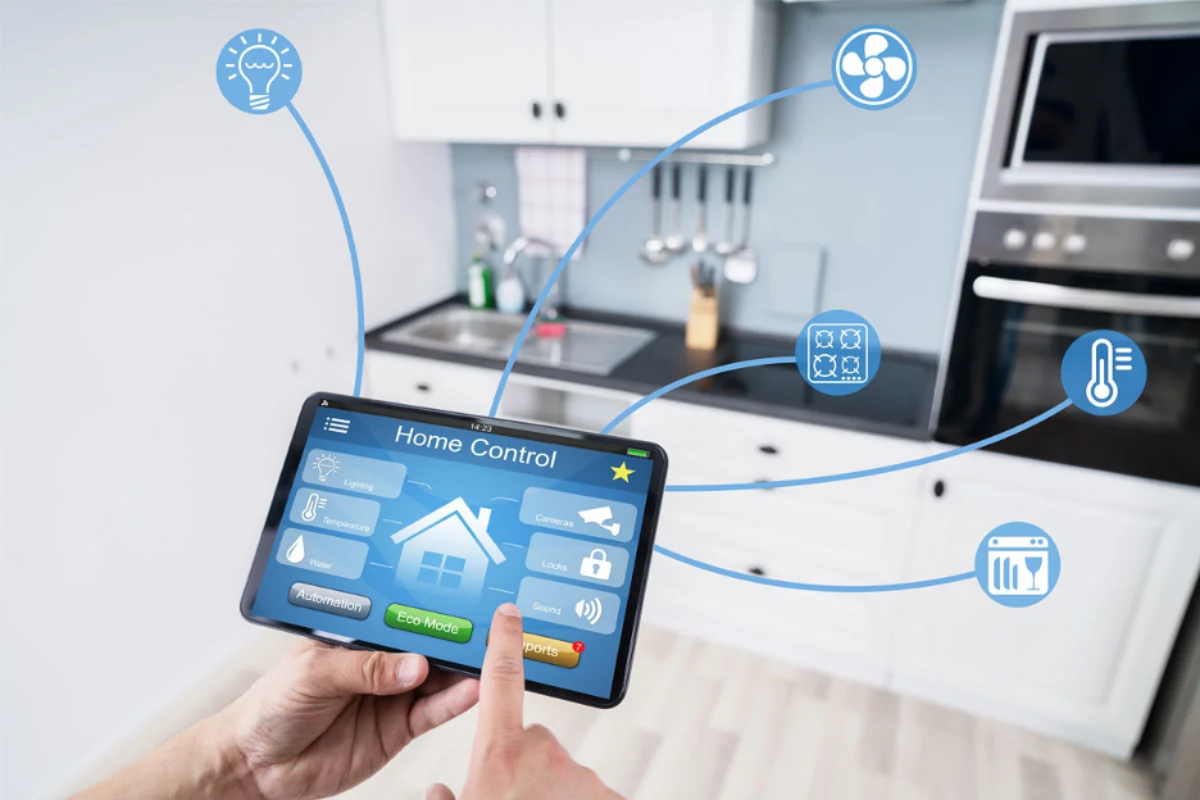
Smart technology in the home has evolved from voice-activated toys to sophisticated resource management systems. The core principle is "Passive Conservation"—the idea that your home should optimize its own consumption patterns without requiring constant manual intervention. When a house knows when you are away, it stops heating empty rooms; when it detects a drop in humidity, it adjusts the HVAC cycles accordingly.
In practice, this looks like a homeowner in a high-utility-cost region like California or Germany using localized climate control to shave 20% off their seasonal bills. According to data from the U.S. Department of Energy, heating and cooling account for roughly 48% of the average home's energy consumption. Precision control isn't just a comfort feature; it is a financial necessity.
Real-world data suggests that a properly configured network of sensors can pay for itself within 14 to 24 months. For instance, a smart leak detector costing $50 can prevent a pipe burst that causes an average of $12,500 in property damage. The value lies in the "preventative" nature of these tools, shifting the home from a reactive environment to a proactive one.
Hidden Costs of Living
Most households bleed money through "vampire loads" and inefficient thermal management. The traditional thermostat is a blunt instrument; it maintains a set temperature regardless of whether anyone is in the room or if a window is open. This lack of granularity leads to massive energy waste, particularly in larger homes where cooling an unused guest suite costs as much as cooling the master bedroom.
Another critical pain point is the "silent leak." A single running toilet can waste up to 200 gallons of water per day, often going unnoticed for months until the quarterly bill arrives. Many homeowners also fail to account for the degradation of appliances caused by inefficient usage patterns, such as running a dishwasher half-empty or using a clothes dryer during peak-rate hours.
The consequences are not just financial but structural. Without automated monitoring, minor issues like a slow drip under the sink or a malfunctioning HVAC capacitor go undetected. By the time the human senses pick up on the problem, the repair cost has often quadrupled. Relying on human memory to manage a home's complex ecosystem is fundamentally inefficient.
Profitable Technologies
Intelligent Thermal Regulation and Zoning
The most immediate impact on your bank account comes from adaptive climate control. Devices like the Ecobee Premium or the Nest Learning Thermostat do more than just follow a schedule. They use geofencing to detect when your smartphone leaves a specific radius, automatically entering "Eco Mode."
This works because it eliminates the "human error" factor of forgetting to turn down the heat. On average, users save 10% to 15% on heating and cooling costs. In a 2,500-square-foot home, this can translate to $180–$300 in annual savings. For maximum efficiency, pairing these with smart radiator valves like those from Tado allows for room-by-room zoning, ensuring you aren't paying to heat the kitchen at 3:00 AM.
Real-Time Electrical Monitoring
You cannot manage what you do not measure. Systems like the Emporia Gen 2 or Sense Energy Monitor install directly into your electrical panel. They use machine learning to identify the "electrical signature" of every appliance in your home.
This allows you to see exactly how much it costs to run your 15-year-old refrigerator versus a newer model. It also identifies "vampire power"—devices like game consoles or cable boxes that draw significant power even when off. Identifying and eliminating these "phantom loads" can save the average household between $100 and $200 per year.
Automated Aqueous Security
Water damage is the leading cause of non-weather-related home insurance claims. Installing a smart water shut-off valve like the Moen Flo or Phyn Plus provides a dual benefit. First, it tracks every gallon used, helping you identify wasteful habits like excessively long showers.
Second, and more importantly, it can automatically shut off the main water line if it detects a catastrophic leak. Many insurance providers, including State Farm and AIG, offer premium discounts of 5% to 10% for homes equipped with these devices. The ROI here is both in the monthly bill reduction and the massive mitigation of financial risk.
High-Efficiency Lighting Ecosystems
While switching to LED bulbs is a basic step, a smart lighting system like Philips Hue or Lutron Caseta adds an extra layer of savings. These systems utilize occupancy sensors to ensure lights are never left on in unoccupied rooms.
Furthermore, "daylight harvesting"—the practice of dimming indoor lights when natural sunlight is sufficient—can extend bulb life and reduce electricity draw. When integrated with a smart home hub, your lights can sync with your utility provider's "Time of Use" (TOU) rates, dimming slightly during peak hours when electricity is most expensive.
Proactive Maintenance
Small, inexpensive sensors placed near high-value appliances can save thousands in replacement costs. A vibration sensor on a washing machine can alert you to an unbalanced drum before it destroys the motor.
Similarly, smart plugs with power-sensing capabilities can notify you if a freezer's power draw spikes, which usually indicates a failing compressor or a dirty condenser coil. By catching these issues early, you move from "run-to-fail" maintenance to "predictive" maintenance, significantly extending the lifespan of expensive hardware.
Success Case Studies
Residential Case Study: The Suburban Efficiency Overhaul
A family of four in a 3,000-square-foot home in Illinois implemented a tiered automation strategy. They installed a smart thermostat, 12 smart radiator valves, and an energy monitor. Over 12 months, their gas consumption for heating dropped by 22%, and their electrical bill saw a 14% reduction. The total investment was $1,100, and the total first-year savings reached $640. They reached a full break-even point in under 20 months.
Commercial Property Case Study: Small Office Optimization
A boutique law firm operating out of a converted residential building struggled with high cooling costs. They deployed smart blinds that automatically closed during peak sun hours (solar tracking) and a smart HVAC system with occupancy sensors. By preventing "solar gain" and reducing cooling in empty conference rooms, the firm reduced its peak summer energy bills by 30%, saving roughly $1,200 over the summer season alone.
Strategic Checklist
-
Audit Your Baseline: Use an energy monitor for 30 days to identify your "base load" (what the house uses when everyone is asleep).
-
Prioritize Thermal Envelopes: Install a smart thermostat first; it has the highest ROI of any single device.
-
Check Insurance Discounts: Call your home insurance provider before buying a water leak detector to see which brands they subsidize.
-
Leverage TOU Rates: Program heavy appliances (dishwasher, dryer) to run only during off-peak hours via smart plugs.
-
Automate your Shadows: Use smart blinds or shades to block heat in the summer and trap it in the winter.
-
Monitor Humidity: Set smart dehumidifiers to trigger only when levels exceed 55% to prevent mold while minimizing power usage.
-
Update Outdoor Irrigation: Replace standard timers with weather-aware controllers like Rachio to avoid watering during rain.
Common Pitfalls
One of the biggest mistakes is "over-automating" with low-quality, generic devices. Cheap smart plugs often have high "parasitic draw" themselves, which can negate the savings they are supposed to provide. Always look for Energy Star-certified hardware.
Another error is ignoring the "Eco-System Lock-in." If you buy devices that don't talk to each other (e.g., a thermostat that doesn't recognize when your smart window sensors are open), you lose the synergistic effects of a truly smart home. Ensure all devices are compatible with a central protocol like Matter or Zigbee to allow for complex, money-saving "If This, Then That" (IFTTT) routines.
Finally, many users fail to update their firmware. Manufacturers often release updates that optimize power consumption or improve sensor accuracy. A "set it and forget it" mentality can lead to missed optimization opportunities as the software evolves.
FAQ
How much can I actually save per year with a smart home?
On average, a fully integrated smart home can save between $400 and $900 annually. This includes roughly $150–$300 on HVAC, $100 on lighting/phantom loads, and $200–$500 in insurance discounts and prevented water damage.
Do smart devices use a lot of electricity themselves?
Most modern smart devices use very little power, often less than 1-2 watts in standby mode. However, if you have 50+ devices, this can add up. It is important to choose high-quality components that use low-power protocols like Zigbee or Thread rather than just Wi-Fi.
Which device has the fastest Return on Investment?
The smart thermostat remains the champion of ROI. In most climates, it pays for itself within the first year of use by optimizing the most expensive system in your home: the HVAC.
Can smart devices really lower my insurance premiums?
Yes. Many major insurers provide discounts for "protective devices." Water leak detectors with automatic shut-off valves and smart smoke/CO detectors are the most likely to trigger these savings.
Is professional installation required for these savings?
Most energy-saving tech, like thermostats and smart plugs, is DIY-friendly. However, whole-home water shut-off valves and electrical panel monitors usually require a licensed plumber or electrician for safe and effective operation.
Pragmatic Automation
In my experience, the mistake most people make is buying "cool" tech instead of "functional" tech. I once spent $200 on smart bulbs for a hallway I rarely use, which was a total waste of capital. Conversely, installing a smart controller for my pool pump saved me $40 a month instantly. My advice is to start with your largest monthly bill—usually heating or cooling—and solve for that first. Don't buy a smart fridge to save money; buy a $30 smart plug for your old chest freezer instead. The goal isn't to have a "futuristic" home; it's to have a home that doesn't waste your hard-earned income.
Summary
Maximizing the financial benefits of a smart home requires moving past the "gadget" phase and into strategic resource management. By prioritizing high-impact areas like HVAC optimization, leak prevention, and peak-load management, homeowners can transform their living space into a self-optimizing asset. Start by auditing your current energy signatures, choose devices that offer insurance incentives, and ensure your ecosystem is integrated for cross-device communication. True automation isn't about control; it's about eliminating the waste you didn't even know you had.