The Architecture of Micro-Financial Leaks
Financial erosion rarely happens through massive, one-time purchases; it occurs via the "latte factor" evolved for the digital age. Most people track their rent, car payments, and utilities, yet ignore the $5 to $15 daily interactions that define their liquidity. These are "frictionless" transactions facilitated by Apple Pay or saved credit card credentials that decouple the joy of consumption from the pain of payment.
In my practice as a financial consultant, I frequently see clients earning over $150,000 annually who struggle to save. When we audit their bank statements, we often find "ghost expenses"—automated renewals for software they don't use or premium delivery fees that add up to thousands. According to a 2024 study by C+R Research, the average consumer underestimates their monthly subscription spend by nearly $133.
The reality is that small, habitual leaks are more dangerous than large debts because they are psychologically invisible. While a $2,000 repair bill causes immediate action, a $12 monthly surcharge for a 4K streaming plan you rarely watch stays active for years, quietly siphoning away your compound interest potential.
Strategic Pain Points: Where Your Capital Dissipates
The primary issue is the "subscription-everything" business model. Companies have moved away from one-time sales to recurring revenue, knowing that "subscriber inertia" is their greatest profit margin. Once a card is on file, the mental barrier to spending is removed.
The Convenience Tax and Impulse Fulfillment
We live in an era of ultra-convenience. Services like UberEats or DoorDash don't just charge for food; they apply a service fee, a delivery fee, and a suggested tip that can inflate a $20 meal to $35. If done three times a week, that is a $2,340 annual "convenience tax."
Unoptimized Recurring Digital Commitments
Digital hoarding is a modern financial disease. Users sign up for iCloud storage upgrades, Patreon tiers, or premium versions of productivity apps like Notion or Slack without ever auditing their utility. These $5–$10 charges are designed to stay just below the "outrage threshold" of a typical bank statement review.
Lifestyle Creep and Hedonic Adaptation
As income rises, so does the baseline of what we consider "necessary." That premium car wash subscription or the high-end gym membership (Equinox, etc.) becomes the new normal. The danger is that these costs become fixed in your mind, making your financial situation brittle if your income ever fluctuates.
Poor Inventory Management
Buying in small quantities is a massive drain. Whether it’s household goods or digital assets, the "unit price" of small, frequent purchases is significantly higher than bulk or annual commitments. People often buy out of immediate necessity rather than strategic planning, leading to a "poverty premium" even for the middle class.
Neglected Financial Maintenance
This includes staying on high-interest credit cards (over 20% APR) instead of transferring balances to 0% intro rate cards like the Wells Fargo Reflect. It also includes "lazy" insurance policies that haven't been shopped around in three years, potentially costing $500–$800 extra annually.
Solutions for Long-Term Capital Preservation
To stop the bleeding, you must transition from reactive spending to proactive capital allocation. This requires a mix of psychological shifts and the right technological stack.
Audit and Automate Subscription Pruning
Use tools like Rocket Money or PocketGuard to aggregate all recurring charges. If you haven't used a service in 30 days, cancel it immediately. For services you must keep, like Amazon Prime or Netflix, check for annual billing options which typically offer a 15–20% discount over monthly payments.
The 24-Hour Cooling Off Rule for Digital Carting
Online retailers use "scarcity" and "one-click" triggers to bypass your prefrontal cortex. Implement a hard rule: any non-essential item over $30 must stay in the cart for 24 hours. Apps like "Icebox" (a Chrome extension) can literally freeze your ability to checkout on sites like Amazon or eBay, forcing a cooling-off period.
Strategic Meal Prep and "Ghost Kitchen" Avoidance
Food is the largest variable expense. Switching from delivery apps to a "hybrid" model—where you use services like HelloFresh for variety but buy staples in bulk from Costco—can save the average household $400 a month. Focus on high-quality ingredients to avoid the "urge" to order out due to bland home cooking.
High-Yield Cash Management
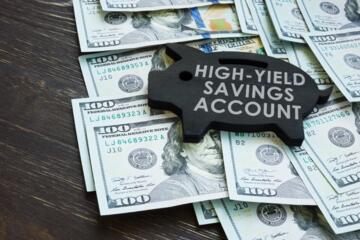
Don't let your "leaked" savings sit in a standard checking account earning 0.01%. Move recovered funds into a High-Yield Savings Account (HYSA) like Marcus by Goldman Sachs or SoFi, currently offering around 4.40%–4.60% APY. This turns a "drain" into a "fountain" of passive income.
Energy and Utility Optimization
Small habits like leaving high-drain electronics on standby or neglecting HVAC filters increase utility bills by 10–15%. Installing a Nest or Ecobee smart thermostat can pay for itself in six months by optimizing heating and cooling cycles based on actual occupancy.
Real-World Case Examples
Case 1: The Freelance Designer
Subject: Sarah, a mid-career UI designer. Problem: Sarah felt she was "just getting by" despite a $90k income. Action: We audited her Adobe Creative Cloud, Figma, and various stock photo subscriptions. We found she was paying for three different cloud storage providers (Google, Dropbox, iCloud). Result: By consolidating storage and switching to annual "pro" plans, she saved $1,100 per year. Removing food delivery apps saved another $3,200. Total annual recovery: $4,300.
Case 2: The Two-Income Household
Subject: The Miller family (two kids). Problem: Sky-high "miscellaneous" spending exceeding $1,500/month. Action: Implemented the "Cash-Only" rule for dining out and used the "Honey" extension to automate couponing for household goods. They also refinanced an 8% auto loan to a 5.5% credit union rate. Result: Monthly cash flow increased by $650. Over five years, including interest saved on the car, the total benefit was approximately $45,000.
High-Impact Check-List for Financial Recovery
-
Weekly: Review bank transactions for any "mystery" charges or price hikes in utilities.
-
Monthly: Check your "Subscriptions" tab in iOS or Android settings; cancel one unused app.
-
Quarterly: Call your internet and insurance providers to ask for "loyalty discounts" or new promotional rates.
-
Annually: Review your investment fees (expense ratios) on platforms like Vanguard or Fidelity. Ensure you aren't in funds with fees over 0.50%.
-
Daily: Practice "Zero-Spending Days" twice a week where no non-essential money leaves your accounts.
Common Pitfalls to Avoid
Many people try to cut everything at once, leading to "frugality burnout." This results in a massive "revenge spend" later. Instead, focus on the "big wins"—insurance, subscriptions, and high-interest debt—rather than agonizing over a single cup of coffee.
Another error is ignoring "small" increases. A $2 increase in your Disney+ or Spotify subscription seems negligible, but when applied across 10 services, it’s a $240 annual hit. Always evaluate the value provided vs. the new price, not just the dollar amount.
Don't forget the "Sales Trap." Buying something you don't need just because it is 50% off is not saving money; it is spending money at a discount. Always shop with a pre-written list to avoid the psychological manipulation of retail environments.
FAQ
How do I find subscriptions I forgot about? Check your email for "Invoice" or "Receipt" keywords, or use an app like Rocket Money which links to your bank and categorizes recurring ACH and card transactions.
Is it worth switching banks for a better interest rate? Yes. If you have $10,000 in savings, the difference between a 0.01% and a 4.5% rate is $449 per year. It takes 20 minutes to open a new account online.
What is the "30-Day Rule"? For any major purchase, wait 30 days. If the desire is still there and it fits the budget, buy it. Usually, the impulse fades, saving you 100% of the cost.
Are cashback credit cards a good way to save? Only if you pay the balance in full every month. If you carry a balance, the 20% interest will instantly negate any 2% cashback rewards you earn.
Should I cancel my streaming services and use free versions? Evaluate your usage. If you spend 20 hours a month on a platform, it’s cheap entertainment. If you spend 2 hours, it’s a waste. Switch to the ad-supported tiers to save 50% immediately.
Author’s Insight
In my years of analyzing cash flow, I've realized that wealth isn't just about what you earn, but the efficiency of what you keep. I once discovered I was paying for a premium LinkedIn subscription for two years that I hadn't logged into once—a $1,400 mistake. My best advice is to treat your personal finances like a business: audit your "vendors" (services) every quarter and never accept a price increase without a negotiation. Financial freedom is often found in the $10 decisions, not just the $10,000 ones.
Conclusion
Stopping the silent drain on your finances requires a shift from passive consumption to active management. By auditing recurring subscriptions, resisting the convenience tax of delivery apps, and utilizing high-yield financial tools, you can redirect thousands of dollars back into your investment accounts. Start by picking three "leaks" identified today and closing them; the cumulative effect over a decade can be the difference between financial stress and early retirement. Focus on systems, not just willpower, to ensure these savings become a permanent part of your financial DNA.