Mastering the Mechanics of Effortless Wealth Building
Building a financial cushion often fails because humans are biologically wired for immediate gratification. Behavioral economics suggests that we view our "future selves" as strangers, making it emotionally difficult to sacrifice a coffee today for a retirement fund thirty years away. Automating your finances bypasses this psychological barrier by removing the "choice" element from the equation entirely.
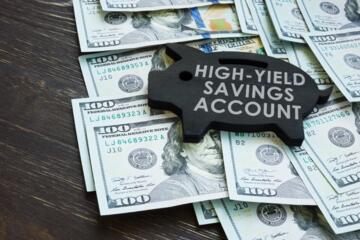
In practice, this looks like a "waterfall" system. When your paycheck hits your primary checking account, software triggers a series of pre-programmed movements. For instance, a $5,000 monthly net income might automatically split: $500 to a high-yield savings account (HYSA), $400 to a brokerage account, and $100 to an emergency fund, all before you even log into your banking app.
Data shows the power of this approach. According to a report by the Journal of Retirement, individuals who use automatic escalation features in their 401(k) plans see their savings rates increase by nearly 4% over a three-year period compared to those who adjust manually. Furthermore, the Federal Reserve indicates that while the average American personal saving rate often hovers around 4–5%, those with automated systems consistently maintain double-digit percentages.
Why Manual Saving Strategies Usually Fail
The most common mistake is treating savings as a "leftover" activity. Most people pay their rent, utilities, and subscriptions, spend on leisure, and then plan to save whatever remains at the end of the month. Statistically, what remains is usually zero. This "residual saving" mindset creates a cycle of living paycheck to paycheck, regardless of income level.
Another pain point is "lifestyle creep." As your salary increases, your manual savings often stay stagnant because the friction of logging into a portal to change a transfer amount feels like a chore. Without an automated "percentage-based" increase, the extra $500 from a promotion usually vanishes into upgraded dining habits or new gadgets rather than an investment portfolio.
The consequences are severe: missed compound interest. A delay of just five years in starting a consistent, automated investment plan can cost a 25-year-old over $300,000 in terminal wealth by age 65, assuming a 7% annual return. Real-world situations often involve "emergency fatigue," where a sudden car repair wipes out a manually curated savings account because it wasn't partitioned or protected by an automated barrier.
Strategic Framework for Digital Wealth Allocation
Configure Your Primary Deposit Split
The foundation of automation is the payroll split. Most employers allow you to designate multiple bank accounts for your direct deposit. Instead of sending 100% to your checking account, redirect a fixed percentage (e.g., 10% or 15%) directly to a separate high-yield savings account or a digital bank like Ally or SoFi.
This works because the money never appears in your "spending balance." If you don't see it, you don't miss it. By the time you look at your checking account to see what you can afford for the weekend, the savings have already been sequestered.
Implement Micro-Saving Through Round-Ups
For those who find large transfers intimidating, "round-up" technology offers a frictionless entry point. Apps like Acorns or the "Round Up" feature in Chime and Monzo track your spending. If you buy a sandwich for $8.40, the app rounds the transaction to $9.00 and moves the $0.60 difference into a savings or investment account.
While $0.60 seems negligible, the frequency of transactions makes it powerful. An average user might execute 40–60 transactions a month. At an average of $0.50 per round-up, that’s $30 a month—enough to cover a small insurance premium or a basic subscription—happening entirely in the background.
Utilize Algorithmic Savings Apps
Third-party tools like Digit or Qapital use Artificial Intelligence to analyze your spending patterns. These apps wait for "safe" moments—days when your balance is high and your scheduled bills are low—to pull small amounts of money into a goal-based vault.
This is particularly effective for freelancers or those with irregular income. The algorithm scales its saving based on your cash flow. If you have a slow month, it saves nothing; if you land a big contract, it aggressively siphons off the surplus. Users of these tools often report saving $2,000–$5,000 annually without feeling any change in their daily standard of living.
Automate Retirement and Brokerage Contributions
Investing is the "growth" phase of saving. Beyond a 401(k), you should set up an Automatic Investment Plan (AIP) with a brokerage like Vanguard, Fidelity, or Charles Schwab. You can schedule a monthly "Pull" from your bank to buy shares of a low-cost S&P 500 index fund or a total market ETF.
By automating this, you engage in "Dollar Cost Averaging." You buy more shares when prices are low and fewer when they are high. This removes the temptation to "time the market," a behavior that typically leads to lower returns for retail investors. Setting a recurring $500 monthly investment in a fund like VOO (Vanguard S&P 500 ETF) ensures you benefit from long-term market appreciation.
Set Up "If-This-Then-That" Financial Triggers
Advanced savers use tools like IFTTT or internal bank "Rules" to create customized saving events. For example, you can set a rule that says: "Every time I spend money at Starbucks, transfer $5 to my Travel Fund." Or, "Every time the local sports team wins, move $20 to my savings."
This gamifies the process. It turns "guilty" spending into a productive saving event. On the corporate side, many high-earners use this to "tax" their own luxury purchases, ensuring that every indulgence is matched by a contribution to their net worth.
Operational Case Studies
The "Mid-Career Pivot" Case
Individual: Sarah, a 38-year-old marketing manager earning $95,000.
Problem: Despite a high salary, Sarah’s savings remained flat at $10,000 for three years due to impulsive weekend spending.
Action: She implemented a three-tier automation: 10% direct deposit split to a high-yield account (4.5% APY), a $400 monthly recurring transfer to a Roth IRA, and enabled "Round-ups" on her primary debit card.
Result: Within 12 months, her liquid savings grew to $22,500, and her retirement account increased by $5,200 (including market gains). The total "invisible" saving amounted to over $1,400 per month.
The "Freelancer Stability" Case
Individual: Marcus, a graphic designer with fluctuating income ($3,000 to $8,000/month).
Problem: Marcus struggled to save for taxes and emergencies because he never knew how much he could "afford" to put away.
Action: He utilized an AI-driven saving app (Digit) and set up a "percentage-of-income" rule via Novo. Every time a client paid an invoice, 30% was automatically moved to a "Tax Vault" and 10% to an "Emergency Fund."
Result: Marcus ended the year with his full tax liability covered ($18,000) and an additional $6,000 in his emergency fund, avoiding the high-interest credit card debt he usually incurred during "slow" months.
Strategic Comparison: Automation Methods
| Method | Effort to Set Up | Impact Level | Best For | Recommended Tool |
| Payroll Split | Low (Once) | Massive | Consistent Earners | Employer HR Portal |
| Recurring Bank Transfer | Low | High | Building Emergency Funds | Ally, SoFi, Marcus |
| Round-Ups | Very Low | Moderate | Students / Casual Savers | Acorns, Revolut |
| AI-Based "Pulls" | Medium | High | Irregular Income | Digit, Qapital |
| Auto-Investment | Medium | Exponential | Long-term Wealth | Vanguard, Fidelity |
Common Pitfalls and Mitigation Strategies
One major error is the "Set it and Forget it" trap. While automation is great, failing to audit your transfers can lead to overdraft fees if your income drops suddenly or if you have a massive unexpected bill. To avoid this, always maintain a "buffer" of at least $500–$1,000 in your primary checking account that is never part of the automation logic.
Another mistake is neglecting the "Interest Rate Gap." Many people automate savings into traditional "big bank" savings accounts offering 0.01% interest. In an environment where inflation might be 3–4%, your automated savings are losing purchasing power. Ensure your destination is always a High-Yield Savings Account (HYSA) or a Money Market Fund.
Lastly, do not forget to automate your "Raise." When you get a salary increase, the first thing you should do—before buying anything new—is log into your portal and increase your automated savings percentage. If you get a 5% raise, move 3% of that directly into your automated stream. You still feel "richer" with the remaining 2%, but your wealth-building accelerates.
FAQ
What is the best percentage to automate for savings?
The industry standard is the 50/30/20 rule, where 20% of your take-home pay goes toward savings and debt repayment. If 20% feels too high, start with 5% and use "Auto-Escalate" features to increase it by 1% every six months.
Can I automate savings if I have high-interest debt?
No. If you have credit card debt at 20% interest, "saving" at 4% is a net loss. Automate your "minimum plus" debt payments first. Once the debt is gone, redirect that same automated amount into your savings accounts.
Are automated savings apps safe?
Most reputable apps like Acorns or Digit use 256-bit encryption and are SIPC or FDIC insured (through partner banks). However, always check that any app you use is linked to a bank with FDIC protection up to $250,000.
Will I be charged fees for these automated tools?
Some AI-based apps charge a monthly subscription ($3–$5). You must calculate if the amount they help you save outweighs the fee. For most, a simple, free recurring transfer through a bank like Ally is more cost-effective.
How do I handle automation with a variable income?
Use a "Sweep" feature. Set a ceiling for your checking account (e.g., $3,000). At the end of the month, any amount over $3,000 is automatically "swept" into your savings or brokerage account.
Author's Insight
In my decade of analyzing personal finance systems, I have found that the most successful "accidental millionaires" are not those with complex trading strategies, but those who made saving invisible. I personally use a "tiered" automation system: my base needs are met by a direct deposit split, while my "fun" money is taxed by a 10% auto-transfer to my travel fund. My biggest piece of advice is to start small; an automated $20 a week is infinitely better than a "planned" $500 a month that never actually happens. The peace of mind that comes from knowing your net worth is growing while you sleep is the ultimate financial luxury.
Conclusion
Automating your savings is the most effective way to bridge the gap between financial intentions and financial reality. By utilizing payroll splits, AI-driven apps, and recurring brokerage contributions, you eliminate the need for daily discipline. Start by setting up a single recurring transfer today, then layering in more complex triggers as your comfort grows. The goal is to create a system where building wealth is the default setting, not a chore.