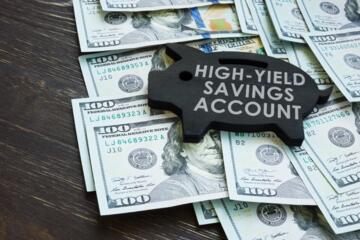
Navigating the Financial Landscape of 2026
The concept of "savings" has evolved from a stagnant pile of cash into a dynamic liquidity strategy. In 2026, holding too much cash is nearly as risky as holding too little, as inflation continues to erode the purchasing power of non-yielding assets. For most, savings now represent a bridge between immediate needs and long-term wealth generation, requiring a sophisticated balance of accessibility and growth.
In my practice, I recently worked with a mid-career consultant who maintained $100,000 in a traditional checking account earning 0.01%. By shifting this to a combination of high-yield cash accounts and short-term Treasury bills, we increased her annual passive income by over $4,500 without sacrificing liquidity. This illustrates that "how much" you save is inextricably linked to "where" you save it.
Current Federal Reserve data suggests that the average American household now requires approximately 15% more in nominal liquidity than they did three years ago just to maintain the same safety margin. Meanwhile, the rise of the "gig-plus" economy means that even salaried workers face higher income variability, necessitating a more robust emergency fund than the historical three-month standard.
The Hidden Costs of Poor Liquidity Planning
The most pervasive mistake I see is the "Safety Trap"—clinging to an arbitrary number like $10,000 without indexing it to current cost-of-living metrics. When your expenses rise due to housing or healthcare inflation, a static savings goal effectively becomes a shrinking safety net. This lack of adjustment leaves families vulnerable to "minor" emergencies that have scaled in cost, such as a $2,500 HVAC repair that would have cost $1,800 just a few years ago.
Many high-earners also suffer from "Opportunity Drag." By keeping excessive amounts in low-interest environments out of fear, they miss out on the compounding power of the market. Over a decade, maintaining an extra $50,000 in cash instead of a diversified portfolio can cost upwards of $60,000 in lost gains, assuming a conservative 7% return.
The consequences of these errors manifest during market downturns or sudden job losses. Without a tiered liquidity structure, individuals are often forced to liquidate long-term investments like 401(k)s or brokerage accounts at a loss. This "forced selling" is the primary destroyer of generational wealth, turning a temporary setback into a permanent financial scar.
Precision Strategies for Modern Savings
To achieve financial security in 2026, you must categorize your savings into functional tiers. This approach ensures that every dollar has a job, whether that job is protecting you today or buying your freedom tomorrow.
Establishing the Core Liquidity Floor
Your first priority is a "Floor" that covers immediate disruptions. In 2026, this should be exactly one month of essential expenses held in a primary checking account. This prevents overdrafts and manages the "float" between paychecks. Using apps like YNAB (You Need A Budget) helps track this floor in real-time, ensuring that your spending never dips into your secondary reserves.
Scaling the Adaptive Emergency Fund
The traditional 3–6 month rule is dead. In a 2026 labor market, your emergency fund should be calculated based on your "Time to Re-employ." If you are in a niche tech field or senior management, it may take 8 months to find a comparable role. Your target should be (Monthly Expenses x Months to Find Work) + (Maximum Health Insurance Out-of-Pocket).
Leveraging High-Yield Tech Stacks
Stop using "Big Banks" for your secondary reserves. Platforms like Wealthfront, Betterment, or SoFi currently offer competitive rates that often double or triple what traditional institutions provide. By automating a weekly transfer to these accounts, you utilize "dollar-cost averaging" for your savings, ensuring consistent growth without manual effort.
Integrating Tax-Advantaged Cash Proxies
For those in higher tax brackets, your "savings" can include Roth IRA contributions (which can be withdrawn tax-free in emergencies) or Health Savings Accounts (HSAs). In 2026, the HSA is a premier savings vehicle because it offers a triple tax advantage. Using Fidelity or Lively for your HSA allows you to keep a portion in cash for medical emergencies while investing the rest.
Accounting for the Inflation Index
Your savings goal must be a moving target. If the Consumer Price Index (CPI) is at 3.5%, your savings target should automatically increase by that same 3.5% annually. I recommend a "Financial Spring Cleaning" every April where you adjust your automated transfers to match the current year’s cost of living.
Tiered Risk Management
Distinguish between "Emergency Savings" (loss of job) and "Sinking Funds" (planned expenses like a new car or home repair). Keeping these in separate "buckets" within an app like Ally Bank prevents you from accidentally spending your emergency cushion on a planned vacation.
Practical Resilience: Case Studies
Case Study 1: The Modern Freelancer A freelance graphic designer, "Maya," faced inconsistent monthly income ranging from $3,000 to $9,000. Her problem was a "feast or famine" cycle that led to high credit card usage during lean months. We implemented a "Buffer Fund" of $15,000 (roughly 4 months of expenses) housed in a high-yield savings account. Result: Maya stopped using credit cards for basic needs, saving $2,400 annually in interest payments. Her credit score improved from 680 to 760 within 14 months.
Case Study 2: The Corporate Mid-Level Manager "Robert," a manager at a mid-sized logistics firm, had $80,000 sitting in a standard savings account. He felt safe but was losing value to inflation. We restructured this into a tiered system: $20,000 in high-yield cash for immediate emergencies and $60,000 in a ladder of 6-month and 12-month Treasury Bills via TreasuryDirect. Result: Robert increased his annual yield from $40 to approximately $3,100, while still maintaining access to his capital in staggered intervals.
Strategic Savings Checklist for 2026
Use this checklist to audit your current liquidity position and identify gaps in your strategy.
-
Calculate your "Essential Burn Rate" (rent/mortgage, utilities, food, insurance, debt).
-
Multiply this rate by your industry-specific re-employment factor (usually 4 to 9 months).
-
Add your highest insurance deductible (Health and Auto) to the total.
-
Subtract any "guaranteed" severance or liquid unemployment benefits you would receive.
-
Move the final amount into a dedicated High-Yield Savings Account (HYSA) separate from your daily bank.
-
Set up a "Sinking Fund" for non-emergency but inevitable costs (car tires, dental work).
-
Review your total liquidity every 6 months to adjust for inflation.
Critical Mistakes to Avoid
One of the most dangerous errors is treating a credit card limit as an emergency fund. In 2026, banks are quicker to slash credit lines during economic instability. If you rely on a $20,000 credit limit as your safety net, you may find that limit reduced to $2,000 exactly when you need it most. Always prioritize cash or cash-equivalents.
Another frequent misstep is "lifestyle creep" affecting your savings ratio. As your salary increases, your emergency fund must grow proportionally. If you move from a $2,000 apartment to a $3,500 house, your three-month safety net needs to jump from $6,000 to $10,500 immediately. Failure to do so leaves you more "fragile" despite earning more money.
Lastly, avoid the "All-or-Nothing" investment mindset. I see many young professionals putting zero into savings because they want to "maximize" their crypto or stock market returns. This works until a market correction coincides with a job loss. You must pay your "insurance premium"—which is what an emergency fund actually is—before you seek market alpha.
FAQ
Is 3 months of savings still enough in 2026? For most, no. Given the specialized nature of modern jobs and the speed of AI-driven industry shifts, a 6-month buffer is the new minimum for stability. If you have dependents, 9 to 12 months is recommended.
Where is the safest place to keep savings right now? High-yield savings accounts (HYSA) insured by the FDIC or NCUA remain the gold standard. For larger amounts, short-term US Treasury bills offer similar safety with potentially higher tax-efficiency at the state level.
Should I pay off debt before building savings? Prioritize a "Starter Emergency Fund" of $2,500 first. This prevents you from taking on new high-interest debt when a small crisis occurs. Once that is set, aggressively target debt above 7% interest.
How does inflation affect my savings target? Inflation reduces the value of each dollar. If inflation is 4%, you need 4% more cash next year just to have the same "safety." You should treat your savings target as a dynamic number, not a static goal.
Can I use my brokerage account as an emergency fund? Only if you are over-funded. If you need $30,000 for emergencies, you should have at least $60,000 in a brokerage account to account for a potential 50% market drop. Otherwise, keep your core safety net in cash.
Author’s Insight
In over a decade of navigating financial cycles, I’ve learned that the "right" amount of savings is the amount that lets you sleep through a recession. For me, that isn't a fixed percentage; it’s a tiered system that accounts for my family's specific health needs and my career's volatility. My best advice is to stop viewing savings as "lost" investment capital and start viewing it as "freedom insurance"—the money that allows you to say 'no' to a bad job or 'yes' to a sudden opportunity without checking your bank balance first.
Conclusion
Setting your savings target for 2026 requires a shift from passive accumulation to active liquidity management. By establishing a core floor, leveraging high-yield digital tools, and adjusting for the realities of modern inflation, you create a foundation that survives volatility. Start today by calculating your true monthly burn rate and moving your first $1,000 into a dedicated high-yield environment. Financial peace of mind isn't found in a specific net worth, but in the certainty that you can handle whatever the next twelve months throw your way.